Key Takeaways
- Start by identifying the main job each window treatment must perform.
- Consider window direction, daily sun exposure, privacy, moisture, and furniture placement.
- Fabric opacity, mounting method, and edge gaps all affect light control.
- Layered treatments can give Clarksville homes flexible daytime and nighttime options.
- Careful measuring supports a better fit, smoother operation, and more reliable privacy.
- Cordless choices can improve safety where children or pets are present.
Choosing window coverings in Clarksville means planning for bright summer sun, humid conditions, changing seasons, and the privacy needs of neighborhoods throughout Montgomery County. Whether you are updating a historic home near downtown or a newer property outside the city center, blind repair in Clarksville, TN can be part of a practical plan for improving everyday comfort and usability.
The right treatment is not automatically the trendiest one. A shade, blind, shutter, or drapery panel should address the room’s actual needs, such as glare control, nighttime privacy, softer daylight, easier cleaning, or a darker space for sleep.
Table of Contents
- Start With the Window’s Main Job
- Study Natural Light and Direction
- Match Treatments to Each Room
- Compare Light-Control Levels
- Balance Privacy and Daylight
- Support Comfort and Energy Use
- Consider Layered Treatments
- Review Safety and Motorization
- Measure, Install, and Maintain
- Avoid Common Buying Mistakes
- Use a Final Checklist
-
Start With the Window’s Main Job
Before choosing colors or patterns, write a quick brief for each opening. Note whether the priority is reducing television glare, protecting privacy, darkening a bedroom, softening harsh light, or making a window easier to operate. Include the window size, nearby furniture, handles, locks, vents, and the view you want to preserve.
A homeowner searching for blind repair near me may also discover that a small operational issue, such as worn tilt components or uneven lifting, is affecting how well an existing treatment performs. Repairing a functioning product can be a sensible option when the fit and style still suit the room.
-
Study Natural Light and Direction
Check each room in the morning, afternoon, evening, and after sunset. East-facing windows often bring stronger morning light, while west-facing windows can create intense late-day glare. South-facing rooms may receive substantial direct sunlight at certain times of day, while north-facing windows often receive gentler, more indirect light.
In Clarksville, observe how summer sun warms rooms with large glass areas and how lower winter light reaches farther into the home. Watch for screen glare, fading near sunny windows, hot glass, and rooms where afternoon light makes a workspace uncomfortable.
-
Match Treatments to Each Room
Living Rooms and Dining Areas
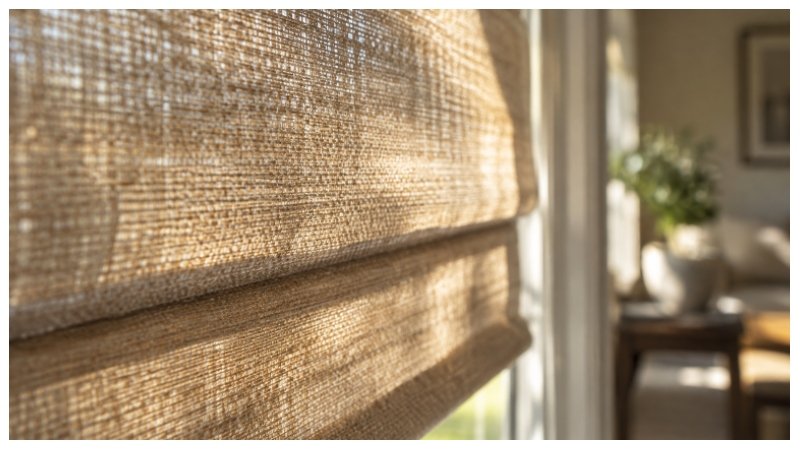
Light-filtering shades, adjustable blinds, woven materials, and drapery can soften daylight while keeping a room welcoming. Choose an option that preserves the view when privacy is not the primary concern.
Bedrooms
Room-darkening or blackout materials are useful for people who sleep during daylight hours, prefer a darker room, or want stronger nighttime privacy. Wider coverage and careful mounting help limit light around the edges.
Home Offices, Kitchens, and Bathrooms
Solar shades and adjustable blinds can help manage monitor glare in an office. Kitchens and bathrooms benefit from easy-clean, moisture-resistant materials that can handle steam, splashes, and frequent use.
- Compare Light-Control Levels
- Sheer:Softens sunlight but offers limited privacy after dark.
- Light-filtering:Reduces glare while keeping the room bright.
- Room-darkening:Provides a stronger reduction in incoming light.
- Blackout:Offers the highest level of light reduction when fitted and mounted well.
Opacity is only one part of the result. Side gaps, top gaps, inside versus outside mounting, and the overall width of the treatment all influence the amount of visible light that enters.
-
Balance Privacy and Daylight
Daytime privacy and nighttime privacy are different concerns. A sheer material may obscure a daytime view into the home, but interior lights can make silhouettes more visible after sunset. Top-down, bottom-up shades can cover eye-level views while allowing daylight to enter from above. Outside mounts can also create broader coverage when minimizing gaps matters.
-
Support Comfort and Energy Use
Window treatments can help manage direct sunlight and improve comfort near glass, especially when they are closed during periods of intense sun. Cellular shades, lined drapery, shutters, and solar-control materials all offer different benefits. A treatment cannot repair a failed seal, damaged frame, or major air leak, so those conditions should be addressed separately. Understanding window energy performance can help homeowners distinguish between a covering issue and a window issue.
-
Consider Layered Treatments
Layering a shade with drapery creates separate daytime and nighttime settings. For example, a light-filtering shade can reduce glare in a living room, while drapery panels add privacy after dark. In bedrooms, a room-darkening shade paired with side panels can improve light control. Check wall depth, hardware clearance, and whether both layers can operate independently.
-
Review Safety and Motorization
Window Covering Safety
For homes with young children or visiting grandchildren, cordless products can reduce hazards associated with accessible cords. Keep cribs, beds, toys, and furniture away from window cords, and inspect older coverings for loose loops or damaged parts. The U.S. Consumer Product Safety Commission’s window-covering safety guidance explains why cordless options are preferred around young children.
Motorization
Motorization can be useful for tall, wide, high, or difficult-to-reach windows. Before choosing it, confirm whether the product uses batteries, requires charging, uses wired power, includes remotes, timers, or smart-home controls. Automation is most valuable when it makes daily adjustment easier.
-
Measure, Install, and Maintain Carefully
Inside mounts sit within the window recess, while outside mounts cover the opening and surrounding trim area. Measure width at the top, middle, and bottom, then measure height at the left, center, and right. Check for uneven frames, handles, locks, trim, and nearby furniture. Follow the product’s instructions exactly, measure twice, and use gentle dusting, vacuuming, or approved spot cleaning methods.
-
Avoid Common Buying Mistakes
- Choosing style before identifying the window’s primary problem.
- Using one opacity level throughout the entire home.
- Ignoring late-afternoon glare on west-facing windows.
- Selecting delicate materials for damp or high-traffic rooms.
- Measuring only once or overlooking hardware clearance.
- Expecting a treatment to correct serious drafts or damaged windows.
-
Use a Final Selection Checklist
- What is the main goal: privacy, glare reduction, darkness, comfort, or appearance?
- How much daylight should remain in the room?
- Is privacy needed during the day, at night, or both?
- Which direction does the window face?
- Will the material handle moisture, pets, children, and cleaning?
- Would an inside mount, an outside mount, a layered design, a cordless lift, or motorization work best?
- Have all measurements been checked more than once?
Conclusion
The best window treatment for a Clarksville home is the one that solves the room’s real needs while fitting the household’s style, budget, safety priorities, and routine. Taking a room-by-room approach helps create a more comfortable home without forcing the same solution on every window. Click here for more Information.